The 3 Alignment Mistakes Keeping You From Your Handstand (And How to Fix Them)
Jan 02, 2026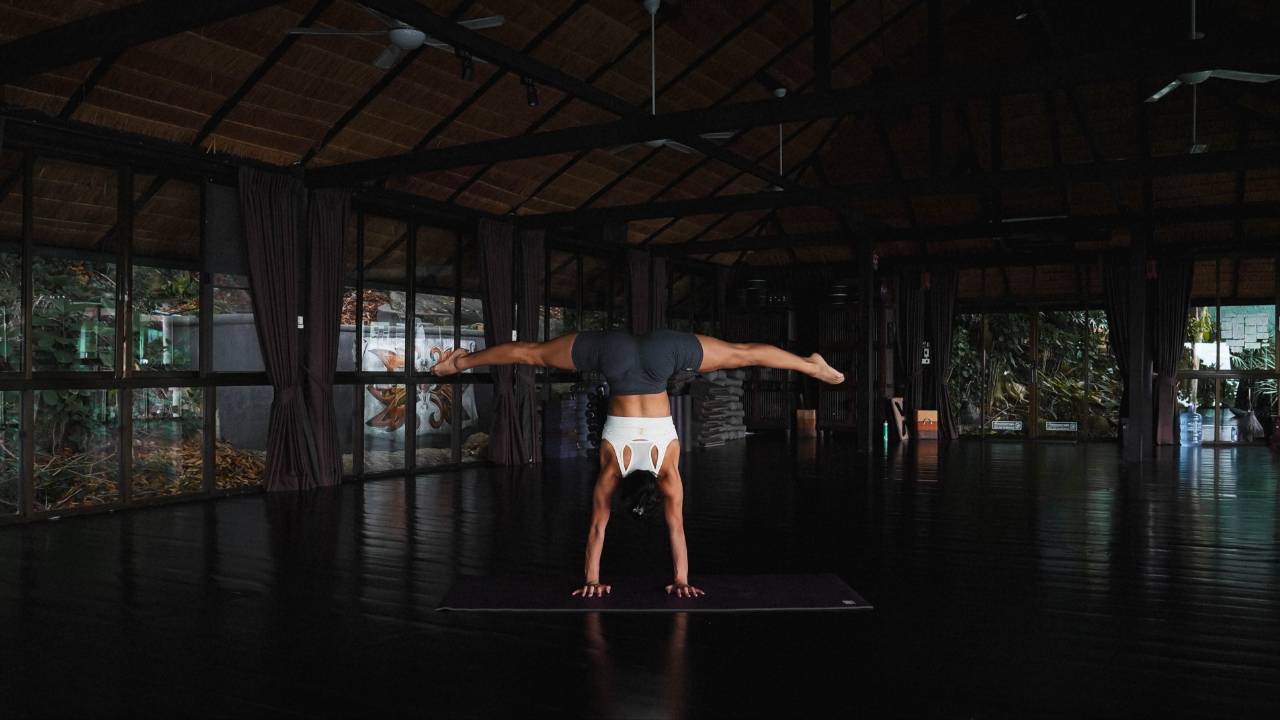
I've taught hundreds of students how to kick up to a handstand, and I can tell you this: the problem is almost never strength.
Most people who struggle with handstands have plenty of strength. What they're missing is proper alignment.
When your body is stacked correctly, handstands feel lighter, more controlled, and way less exhausting. When your alignment is off, even the strongest athletes will shake and fall.
Today, I'm breaking down the three most common alignment mistakes I see—and the simple fixes that make everything click.
Mistake #1: Shoulders Collapsed Instead of Protracted
What It Looks Like:
Your shoulders sink down toward your ears, creating a "crunched" look. Your neck disappears, and you feel heavy and unstable.
Why It's a Problem:
Collapsed shoulders mean you're not actively pushing through your hands. Without that upward push, your entire structure becomes passive and wobbly. You're essentially "hanging" in your joints instead of actively holding yourself up.
The Fix: Push the Floor Away
Think about pushing the ground away from you as hard as you can. This action—called shoulder protraction—creates space between your shoulders and ears, engages your serratus anterior (the muscles along your ribs), and gives you a stable foundation.
Try This:
In a plank position, actively push the floor away without moving your body. Feel your shoulder blades spread wide across your back? That's protraction. Now take that same feeling into your handstand.
Mistake #2: Arched Back (Banana Shape)
What It Looks Like:
Your lower back arches dramatically, your ribs stick forward, and your legs hang out in front of your body instead of stacking directly overhead.
Why It's a Problem:
The banana shape shifts your center of gravity forward, forcing you to work way harder to stay balanced. It also compresses your lower back and makes it nearly impossible to hold a freestanding handstand.
The Fix: Ribs In, Glutes Engaged
Instead of letting your ribs flare and your back arch, think about pulling your front ribs down toward your hips. At the same time, engage your glutes gently—not a hard squeeze, just enough to bring your pelvis into neutral.
This creates a straight line from your wrists all the way through your hips and up to your toes.
Try This:
Stand against a wall. Press your lower back flat against it while keeping your arms overhead. Feel how your ribs pull in and your core engages? That's the same shape you want in your handstand.
Mistake #3: Legs Doing the Work Instead of Hips
What It Looks Like:
You kick your legs up with force, hoping momentum will carry you into the handstand. Sometimes you overshoot and crash into the wall. Other times you don't get high enough and fall back down.
Why It's a Problem:
Kicking from your legs makes the movement wild and uncontrolled. You're relying on luck instead of technique. Plus, it teaches your body bad habits that make freestanding balance nearly impossible.
The Fix: Lift From Your Hips, Not Your Legs
The secret to a controlled kick-up? Lift your hips up and over your shoulders. Your legs will follow naturally—they don't need to do much work at all.
Think of it like this: your hips are the anchor point. Get them directly over your wrists, and your legs will stack effortlessly.
Try This:
Practice L-shaped handstands against the wall. Walk your feet up the wall until your body forms an L (hips over shoulders, legs at 90 degrees). Feel that hip-over-shoulder sensation? That's what you're aiming for when you kick up—you just add the legs at the end.
Putting It All Together
Here's your alignment checklist every time you practice:
✓ Shoulders: Protracted (push the floor away)
✓ Core: Ribs in, slight glute engagement
✓ Hips: Lifting up and over shoulders
✓ Gaze: Eyes looking at the floor between your hands
✓ Hands: Fingers spread wide, actively gripping
Pro Tip: Film yourself from the side. You'll be amazed at what you see. Most people don't realize they're arching or collapsing until they watch the video.
Final Thoughts
Handstands aren't about being naturally strong or fearless. They're about understanding how to stack your body efficiently so gravity works with you, not against you.
Fix these three alignment mistakes, and I promise—you'll feel the difference immediately.
Your handstand will feel lighter. More controlled. And way more fun.
Ready to Master Your Kick-Up?
If you want step-by-step guidance on building a solid, sustainable handstand practice, check out my Kick Up to Handstand program. I break down every alignment cue, every drill, and every progression you need to go from beginner to confident—with a bonus core class to support your strength.
Let's get you upside down with confidence.
Never Miss a Post!
Get new articles, training tips, and movement insights delivered to your inbox weekly.
We hate SPAM. We will never sell your information, for any reason.
Author